
Master Meta Ads. Crack Interviews. Build a High-Paying Career
Meta Ads Roadmap 2026: The Complete Guide to Building a High-Paying Career in Performance Marketing
Introduction
The digital advertising industry is experiencing unprecedented growth. Businesses across the world are investing heavily in Facebook and Instagram advertising to generate leads, drive sales, increase brand awareness, and scale their businesses.
As a result, the demand for skilled Meta Ads professionals has never been higher.
Whether you are a student, freelancer, entrepreneur, marketing executive, or career changer, learning Meta Ads can open doors to exciting opportunities in digital marketing, performance marketing, lead generation, media buying, and growth marketing.
However, one of the biggest mistakes aspiring professionals make is focusing only on ad creation.
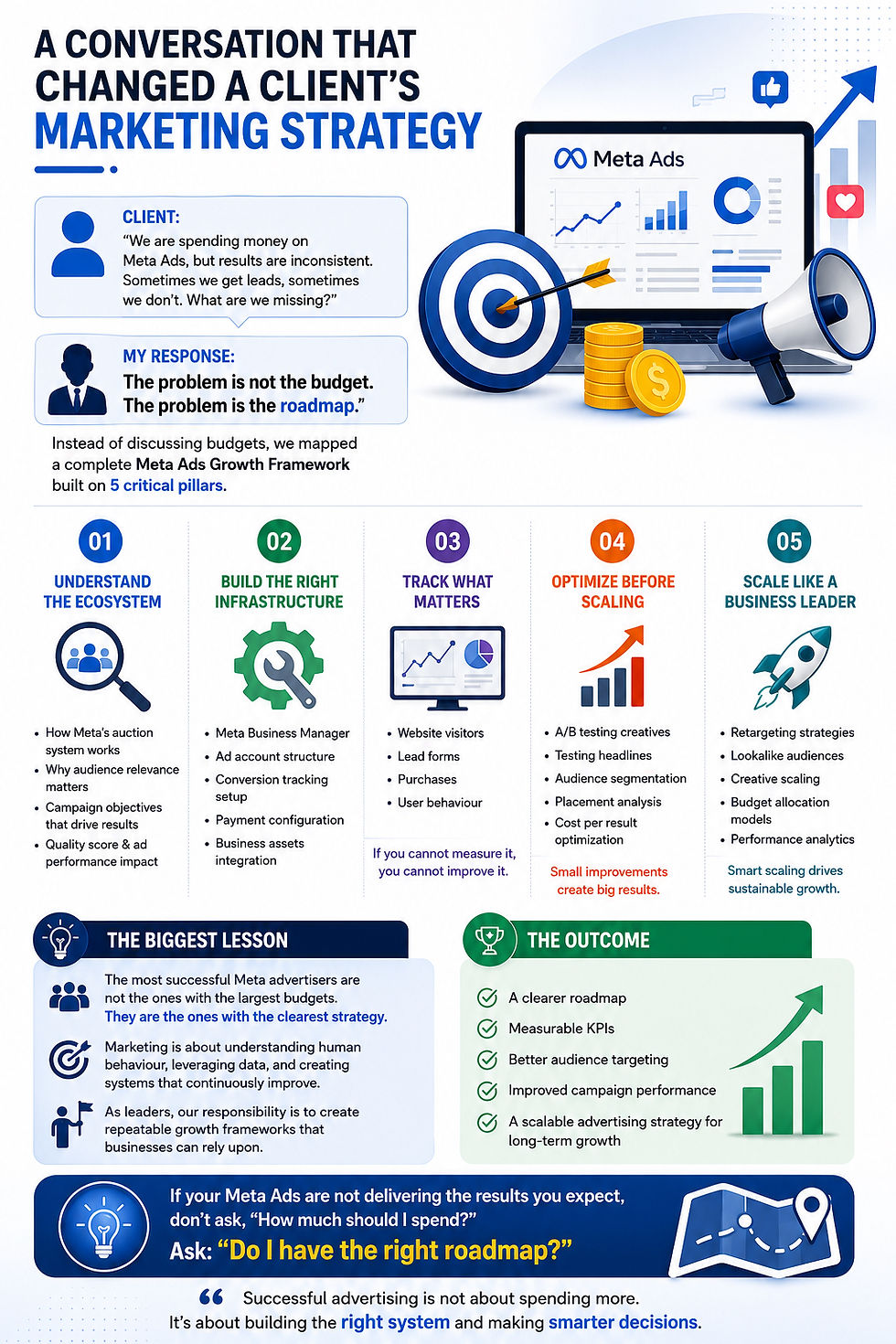
Successful Meta Ads professionals understand the complete advertising ecosystem—from audience research and campaign setup to optimization, reporting, scaling, and business strategy.
This roadmap provides a structured path to becoming interview-ready, job-ready, and industry-ready in Meta Ads.
Phase 1: Understanding the Meta Ads Ecosystem
What Are Meta Ads?
Meta Ads are paid advertisements that run across Meta’s ecosystem, including Facebook, Instagram, Messenger, Audience Network, and other Meta-owned platforms.
Businesses use Meta Ads to:
Generate leads
Increase sales
Drive website traffic
Promote mobile applications
Build brand awareness
Engage with customers
Understanding the platform is the foundation of a successful career in performance marketing.
How the Meta Advertising Auction Works
Many beginners believe the highest bidder always wins.
In reality, Meta’s advertising system considers:
Bid Amount
Estimated Action Rate
Ad Relevance
User Experience
Quality Ranking
Understanding these factors helps marketers improve campaign performance while reducing advertising costs.
Ad Rank and Quality Score
Meta evaluates advertisements based on:
Engagement Quality
User Feedback
Landing Page Experience
Relevance to Audience
Higher-quality advertisements generally receive better placement and lower costs.
Phase 2: Learning Campaign Types
Understanding campaign objectives is one of the most important interview topics.
Awareness Campaigns
Designed to increase brand visibility and recognition.
Best for:
New businesses
Product launches
Brand positioning
Traffic Campaigns
Focused on driving users to websites, landing pages, or applications.
Used for:
Website visits
Blog traffic
Content promotion
Engagement Campaigns
Designed to generate:
Likes
Shares
Comments
Video Views
These campaigns help increase audience interaction.
Lead Generation Campaigns
Used to collect customer information directly through Meta Lead Forms.
Commonly used by:
Consultants
Real Estate Firms
Educational Institutions
Service Providers
Sales and Conversion Campaigns
Designed to generate measurable business outcomes such as:
Purchases
Bookings
Registrations
Revenue
Phase 3: Audience Research and Targeting
Audience targeting is often considered the backbone of successful Meta advertising.
Core Audiences
Target users based on:
Age
Gender
Location
Interests
Behaviors
Custom Audiences
Create audiences using:
Website visitors
Customer lists
App users
Video viewers
Lookalike Audiences
Meta identifies new users who resemble existing customers.
Benefits include:
Higher conversion rates
Better lead quality
Improved scalability
Audience Insights
Marketers use audience data to understand:
Demographics
Interests
Purchase behavior
Engagement patterns
Phase 4: Meta Business Manager Setup
Every professional Meta advertiser should know how to configure a complete advertising account structure.
Business Manager Setup
Business Manager helps organizations manage:
Ad Accounts
Pages
Team Members
Pixels
Payment Methods
Ad Account Configuration
A properly structured account improves:
Campaign management
Reporting
Security
Scalability
Payment Method Configuration
Understanding billing systems is critical for professional account management.
Phase 5: Campaign Setup and Structure
This is one of the most frequently discussed topics during Meta Ads interviews.
Campaign Level
Defines:
Objective
Buying Type
Budget Strategy
Ad Set Level
Controls:
Audience
Placements
Schedule
Optimization Settings
Ad Level
Includes:
Creative
Headlines
Primary Text
Call-to-Action
A strong understanding of campaign structure demonstrates professional expertise.
Phase 6: Meta Pixel and Conversion Tracking
What is Meta Pixel?
Meta Pixel is a tracking code installed on websites to monitor user behavior.
It helps businesses understand:
Website visits
Lead submissions
Purchases
User actions
Standard Events
Examples include:
Page View
Lead
Purchase
Add to Cart
Complete Registration
Custom Conversions
Businesses can create customized tracking actions based on specific objectives.
Server-Side Tracking
Modern advertisers increasingly rely on Conversion API and server-side tracking to improve data accuracy.
Phase 7: Campaign Optimization
Optimization separates average marketers from high-performing professionals.
Key optimization metrics include:
CTR (Click-Through Rate)
Measures audience engagement with advertisements.
CPC (Cost Per Click)
Indicates how efficiently traffic is generated.
CPM (Cost Per Thousand Impressions)
Measures advertising costs for audience reach.
Cost Per Result
A critical metric for evaluating campaign profitability.
Phase 8: A/B Testing
Professional marketers never rely on assumptions.
They test.
Common A/B tests include:
Headlines
Ad Creatives
Audiences
Placements
Landing Pages
CTA Buttons
Continuous testing improves performance and profitability.
Phase 9: Audience Retargeting
Most customers do not convert on their first interaction.
Retargeting allows businesses to reconnect with:
Website visitors
Video viewers
Lead form users
Cart abandoners
Previous customers
Retargeting often delivers some of the highest ROI in digital advertising.
Phase 10: Advanced Meta Ads Strategies
As professionals grow, they must master advanced techniques.
These include:
Dynamic Ads
Advantage+ Campaigns
Placement Testing
Budget Optimization
Scaling Strategies
These skills are highly valued by employers and clients.
Phase 11: Creative and Copy Strategy
Even the best targeting cannot save poor creative content.
Successful advertisements combine:
Strong Hooks
Capture attention within seconds.
Compelling Storytelling
Build emotional connection.
Clear Offers
Communicate value quickly.
Effective Calls-to-Action
Guide users toward the desired action.
Phase 12: Analytics and Reporting
Employers expect Meta Ads professionals to interpret data and generate actionable insights.
Key reporting areas include:
ROAS
CPA
CTR
CPC
CPM
Conversion Rate
Strong analytical skills often lead to leadership opportunities.
Phase 13: Landing Page Optimization
A successful campaign does not end with a click.
Landing pages must be:
Fast-loading
Mobile-friendly
Conversion-focused
User-friendly
A poor landing page can destroy campaign performance.
Phase 14: Scaling and Budget Management
Scaling is where businesses generate significant growth.
Successful scaling requires:
Budget planning
Audience expansion
Creative diversification
Horizontal scaling
Vertical scaling
The goal is profitable growth, not simply higher spending.
Phase 15: Freelancing and Career Development
Meta Ads professionals have multiple career opportunities.
Popular roles include:
Meta Ads Specialist
Performance Marketing Executive
Digital Marketing Manager
Media Buyer
Growth Marketer
Paid Ads Consultant
Freelancers can also build profitable careers through:
Client acquisition
Proposal writing
Portfolio development
Reporting systems
Long-term client retention
Common Meta Ads Interview Questions
Employers frequently ask:
How would you reduce Cost Per Lead?
How do you optimize a low-performing campaign?
What KPIs do you monitor?
How does Meta Pixel work?
How would you scale a successful campaign?
Preparing for these questions significantly improves interview performance.
Conclusion
The future belongs to marketers who combine strategy, analytics, creativity, and technology.
Meta Ads is no longer just a marketing skill.
It is a business growth skill.
Those who master audience research, campaign management, tracking, optimization, reporting, and scaling will continue to be in high demand across industries.

The opportunity is enormous.
The roadmap is clear.
The only question is:
Are you ready to become the Meta Ads professional that businesses are searching for?
Leadership Insight
“Your salary is not determined by the courses you complete. It is determined by the value you create and the problems you solve.”

Comments